Advertising for home care services
When a family looks for help at home, the decision is personal and sometimes urgent. People want to know who will walk through the door, what support they can provide and how the family will stay informed.
The challenges in your industry
Reluctance to let someone unfamiliar into the home
Enquiries for needs or areas you cannot cover
Unclear expectations about availability and costs
How we help
We target ads to the areas you serve, with respectful messages that explain the support available. We build a website that introduces your team, makes the scope of care clear and helps families start a conversation about their needs. Explore our advertising and website services and see the linked case study.
What families need to know before getting in touch
A search for home care can begin with very different situations. Someone may want companionship for a parent, while someone else needs help with everyday activities. If an advert only talks about care and professionalism, families still cannot tell whether your service meets their needs. The message should name the practical support you can provide.
On the page, we explain what working together involves. Which activities can your team help with? How are schedules discussed? What happens when needs change? These answers should be easy to find. The wording should also avoid suggesting that you provide medical services when these are outside your offer.
How you present evidence of trust matters too. Real photographs, relevant team experience and reviews published with permission can help families form a clearer picture. We avoid distressing imagery and messages that make people feel guilty.
We build the page around a clear conversation without pressure. We explain which details are useful for the initial discussion and who will respond. The form asks only for information needed to make contact, rather than sensitive medical histories. This helps people make an informed next step and gives you the context to assess whether your service is suitable for their family.
When we use Google and where Meta can help
For home care advertising, we start with the language people use to describe their needs. On Google Search, we can build campaigns around searches for care, companionship or everyday assistance, where these match your services. We separate different intentions so that someone seeking support for a parent reaches the right explanation.
We also review searches that do not match your offer. Job enquiries, training searches and requests for services you do not provide can use up budget without creating relevant conversations. We use these findings to refine search terms and messages. The campaign area reflects where your team can actually work.
On Facebook and Instagram, we propose content that explains the service before someone makes an enquiry. Introducing your team or showing which activities are included may be more appropriate than repeatedly asking people to get in touch. We can test enquiry campaigns with clear forms if your team has the capacity to respond and assess requests.
We do not assume every channel needs to launch together. Our choice depends on existing demand, available material and your team's time. We start with a clear hypothesis, then compare the relevance of the conversations. Messages stay respectful and avoid implying that we know the personal circumstances of the person seeing the advert.
How we distinguish an enquiry from a suitable opportunity
After a website enquiry, we track contact with the family, clarification of their needs and the next steps agreed. In home care marketing, we track submitted forms, calls and conversations that fit your offer separately. For calls, we review whether they were answered and which service was requested, helping us identify searches that bring relevant conversations.
Together, we define a relevant contact. This might be a family within your service area, requesting support you provide, with whom you have managed to speak. The reasons an enquiry is unsuitable are equally useful: an uncovered location, a different need or a lack of team availability.
We report cost per enquiry and, when the necessary information is available, cost per qualified contact. We also track the page's conversion rate, with a clear definition of the action being measured. If forms arrive without useful conversations, we examine the message, the form questions and how enquiries are handled.
Our reporting should help you decide what to change. We connect campaign data with team feedback without putting sensitive family information into marketing reports. If the budget attracts interest in an unavailable service, we adjust the advertising. If the same questions keep appearing, we add the missing explanations to the page before seeking more traffic.
Matter of Care: what the enquiries tell us
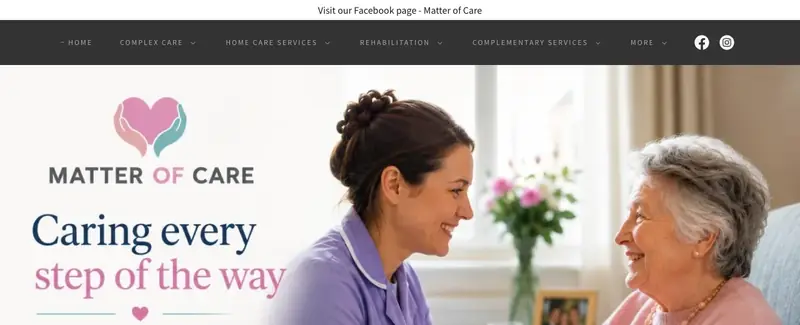
For Matter of Care, a home care provider, we worked with Google campaigns focused on enquiries from families. The case study reports steady enquiries from families, at a cost of ~15 € per contact.
For your service, we propose separate ad groups for companionship and everyday assistance, based on the support you offer. Each landing page explains the activities included, areas covered and how schedules are arranged. Families can find answers about the support available and the steps involved in starting to work with your team.
What you can apply is the discipline of connecting an advert to a specific need and a measurable action. Before launching a campaign, clarify the services you want to promote and the response a family will receive. After launch, record whether conversations are relevant and what information people are missing when they contact you.
In your weekly report, we track searches that bring suitable enquiries, cost per contact and the services requested. We add your team's feedback on families' questions, including continuity of support and scheduling flexibility. We use this feedback to improve the page and refine adverts so that messages address the needs raised in conversations more clearly.